Blog
Bad habits when choosing children’s clothes that mothers should avoid
Jun
Choosing clothes for your child may seem simple, but in reality it is a “soft skill” that not all parents master right from the start. If you have ever been confused by a rack full of clothes, or hesitated between sizes, rest assured – you are not alone. To help parents avoid common mistakes when buying clothes for their children , Rabity shares 9 “small but wrong” habits that parents should know so that their children are always dressed beautifully, comfortably and develop healthily.
1. Choosing clothes that fit your child too well
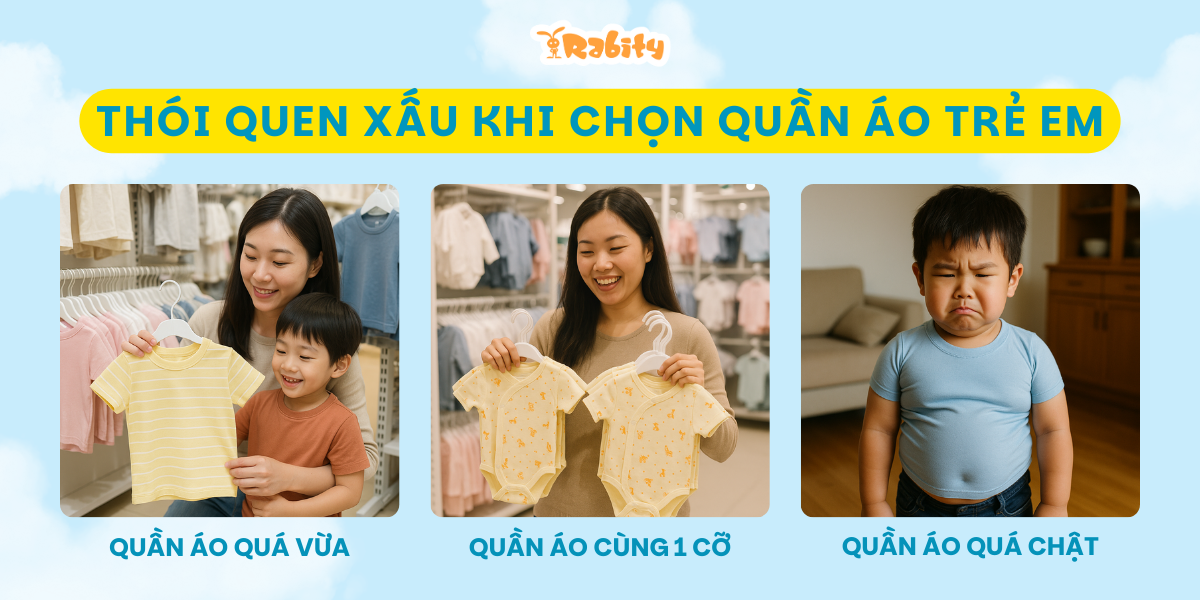
When buying clothes for their children, many parents often choose clothes that “fit” their child’s current body shape. However, this sometimes causes discomfort for the child during daily activities.
Young children always need to move a lot, crawl, roll, run and jump, so a slightly loose outfit will help them move more comfortably and limit clothes from rubbing against the skin – especially in thin skin areas such as the neck, armpits, and groin.
In addition, because babies often wear diapers inside, if you choose clothes that are too tight, it will cause the abdomen and thighs to be constricted, causing irritation and skin marks. In the summer, wearing tight clothes can also make babies susceptible to stuffiness, rashes or diaper rash due to sweat not being able to escape quickly.
👉 Suggestion from Rabity: Parents should choose clothes 1 size larger to ensure that the baby can fit even when wearing diapers, and to make the baby feel cooler and more comfortable all day long.
2. Buying too many clothes of the same size
One of the bad habits when shopping for babies that many parents often have is buying many clothes of the same size. This seems to help save money, but in reality it is wasteful and makes the baby uncomfortable to wear after only a few months.
Babies grow very quickly – in just 2–3 months, they can gain weight, grow taller, and make “fit” clothes feel tight and constricting. Clothes that are too tight not only make your baby uncomfortable, but also affect their movement, sleep, and skin.
Smart shopping solutions for parents:
Choose 2 flexible sizes:
- 1 size fits now
- 1 size up so baby can wear it for the next few months
Classification by usage needs:
- Home wear: prioritize comfort, absorbency, easy to wash
- Going out clothes: nice form, fit, easy to coordinate
- Pajamas: soft, loose, not tight
This method not only helps your baby always wear comfortable clothes but also helps parents save money, avoiding buying all at once and then wasting because the baby grows too fast.
3. Let your baby wear clothes that are too tight
Children need comfort to move, play and grow healthily. Wearing clothes that are too tight makes it difficult for them to move, makes them irritable, and can even affect their circulation and skin – especially in sensitive areas such as the abdomen, thighs, neck and armpits.
However, in order to save money, many parents still let their children wear tight clothes or buy clothes that “fit” without taking into account the child’s rapid growth rate. This is a common mistake that parents should change.
Parents can save money on shopping for their children while still ensuring that their children wear the right size, comfortable and safe clothes. Parents can buy genuine, quality products at the best prices from regular sales on the website Rabity.vn.
Parents, please refer to the children’s clothing that is being promoted at a very good price on the Rabity website 👉 https://rabity.vn/collections/sale-he-ruc-ro
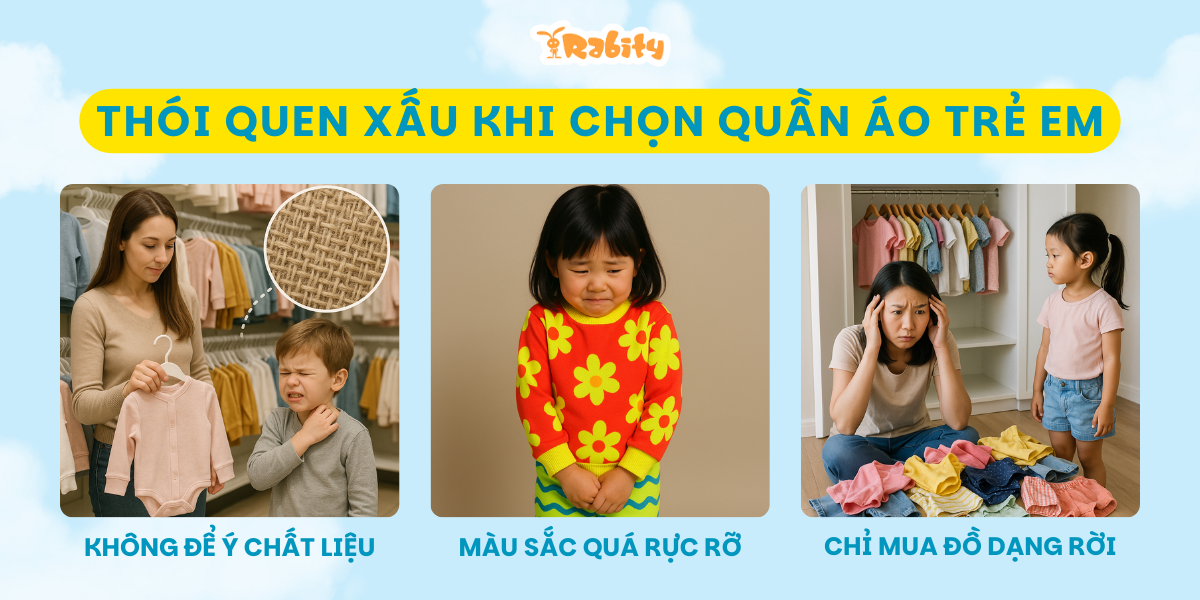
4. Don’t care about the fabric
The children’s clothing market in Vietnam is extremely diverse, from designs to prices. However, not all products are safe for babies’ sensitive skin. One of the common mistakes when buying clothes for children is not paying attention to the fabric.
Baby’s skin is thin, easily irritated and sensitive to external factors. Wearing clothes made from poor quality fabrics can cause itching, rashes, and even skin allergies without parents knowing.
What should parents keep in mind when choosing clothing materials for their children?
- Prioritize soft, cool, absorbent fabrics
- Cotton and Modal are the most recommended materials: natural, absorbent, safe for baby’s skin.
- In addition, fabrics such as linen, ramie, and muslin are also ideal choices for hot and humid weather like Vietnam.
Shopping tips: Parents should carefully check the fabric composition on the product tag or touch the fabric if buying directly. For online products, prioritize reputable brands that clearly state the material and guarantee the quality of the fabric is safe for children.
👉 At Rabity, baby products are always carefully selected for their soft, cool, and skin-friendly materials for children from 1 to 14 years old.
5. Choose clothes with too bright colors
There is no denying that bright, vibrant children’s clothing often makes babies look cuter and more attractive. However, behind that eye-catching color layer can be a potential risk to the sensitive skin of young children.
Some brightly colored clothing is dyed with Azo dyes – a chemical dye that can cause skin irritation if not handled properly. When excessive amounts of Azo are left in the clothing and the clothing is not washed thoroughly, the dye can be absorbed through the skin, causing allergies, rashes, and even dermatitis in young children.
6. Don’t be quick to “avoid” jumpsuits – an extremely useful item in your baby’s wardrobe.
Many parents often ignore one-piece clothing such as jumpsuits or bodysuits because they think they are difficult to put on, inconvenient to change diapers or cumbersome to wash. However, in fact, this is one of the extremely useful items in certain situations – especially when the weather turns cold, the baby sleeps in air conditioning, or goes to bed at night.
With a one-piece design, jumpsuit/bodysuit helps retain heat effectively, limiting the situation of the baby’s belly, back being exposed or the wind blowing into the body when moving while sleeping. This is also an ideal choice when taking the baby out early in the morning or late at night.
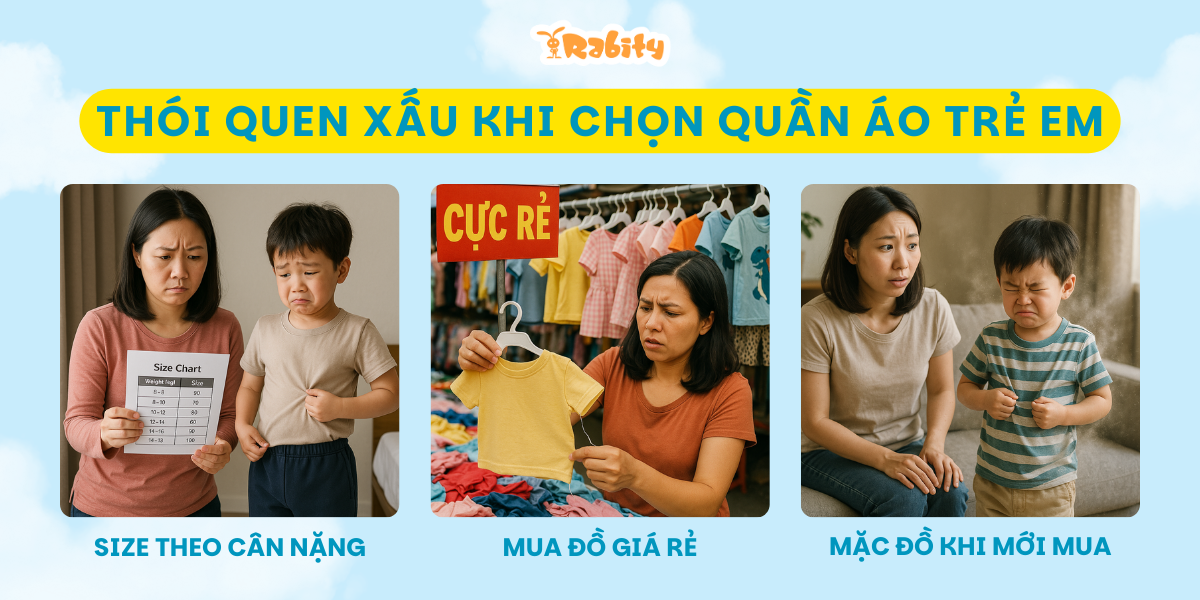
7. Believe in the clothing size chart by weight
Nowadays, many children’s clothing size charts are divided by age (0–3 months, 6–12 months, 1–2 years old…) or by weight. However, these are only relative parameters, because each child will have a different growth rate and physique.
To choose the right size of clothes, parents should:
- Estimate your baby’s height, weight and waist/trunk circumference
- Try it on in person if buying in store
- Or if you buy online, ask the consultant for support. Based on the basic measurements you provide, the staff can suggest a more accurate size, suitable for each baby’s body shape.
Parents, please refer to how to choose children’s clothing sizes:
8. Buy cheap stuff
When having a baby, parents – especially mothers – have to spend a lot of money on diapers, milk, vaccinations, living expenses, etc. Therefore, many people tend to save money on clothing by choosing to buy cheap clothes for their babies.
However, according to Rabity, this is an option that should be carefully considered.
Cheap children’s clothing often comes with quality risks:
- Poor fabric quality, easily causes skin irritation
- Dyes of unknown origin, potentially containing toxic chemicals
- The sewing form is not standard, causing discomfort when wearing.
9. Dress your child as soon as you buy them.
Another common mistake that many parents make is dressing their baby in clothes immediately after buying them. Even though they are brand new and unused, during the manufacturing, packaging and shipping process, clothes can be covered in dust, contain bacteria or have residual chemicals used to treat fabrics such as formaldehyde, dyes, fabric softeners, etc.
With the delicate and sensitive skin of young children, wearing unwashed clothes can cause irritation, itching or skin allergies. Therefore, before letting your baby wear them, parents should always wash and dry new clothes to ensure absolute safety for your baby!
Hopefully, the above sharing from Rabity will help parents better understand common mistakes when buying clothes for their children – from choosing the wrong size, ignoring the material, buying clothes that are too tight to forgetting to wash new clothes…
And if parents are looking for a quality, safe and cute children’s fashion brand, don’t forget Rabity Kids Fashion – where parents can rest assured when choosing clothes, and children can always comfortably dress beautifully every day.
